Reactor Essentials — a curated path
Hand-picked chapters drawn from across the CRE series
Systems, books and research that take on societal problems: how students succeed, how a municipality chooses and runs its sanitation, how a research centre is governed, how a small enterprise gets its product into the field. The work is done with the institutions that carry those problems, and everything it produces is published.
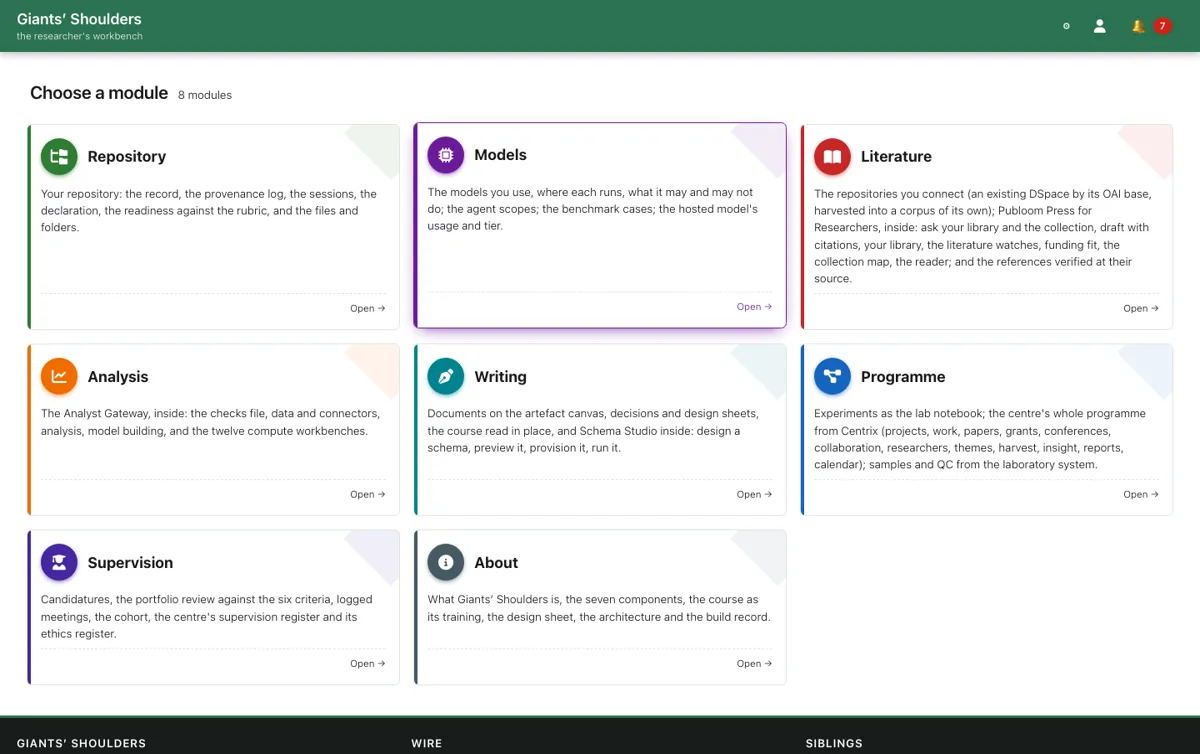
Three systems that together are Modern Scholarship's answer to the university: AutoScholar for the work of the institution, ScholarCloud for the student, Giants’ Shoulders for the researcher. Built on one platform, one database and one set of members, and sold as one suite. Each card opens a walkthrough of the system in screenshots; where a public demo exists, its address sits beneath. The systems that run for an institution are reached through that institution only. Every other system on this page is a Modern Scholarship project too.
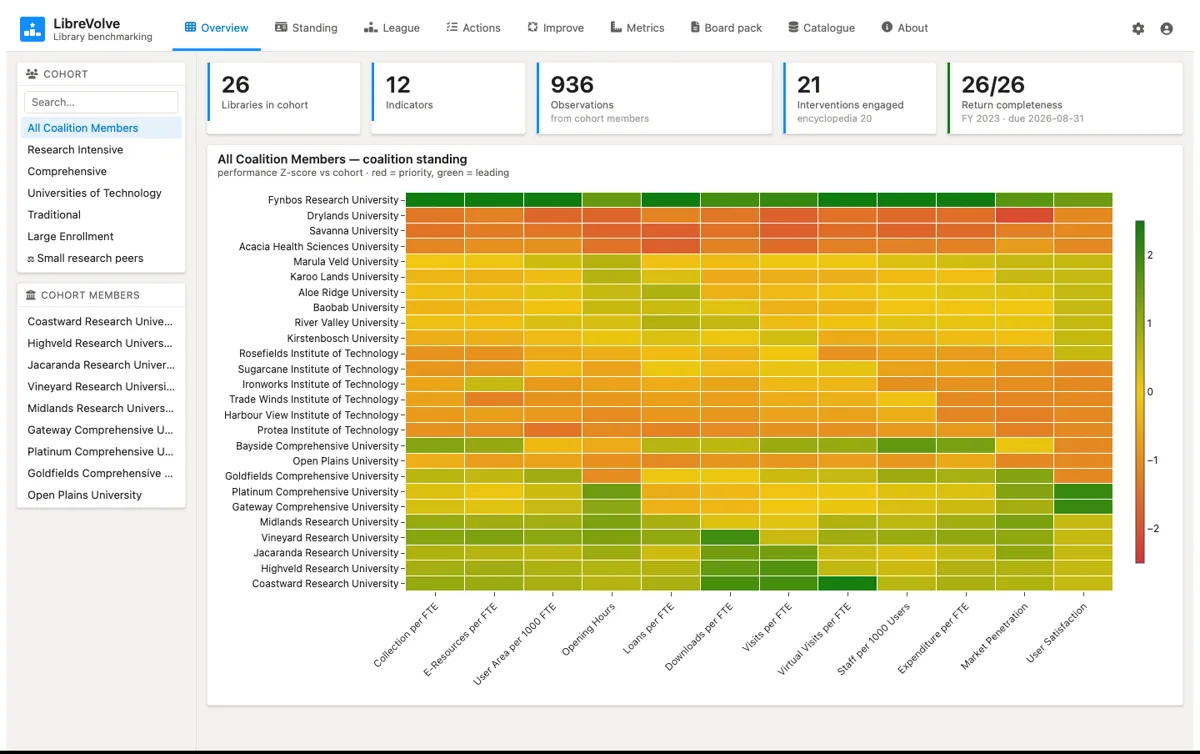
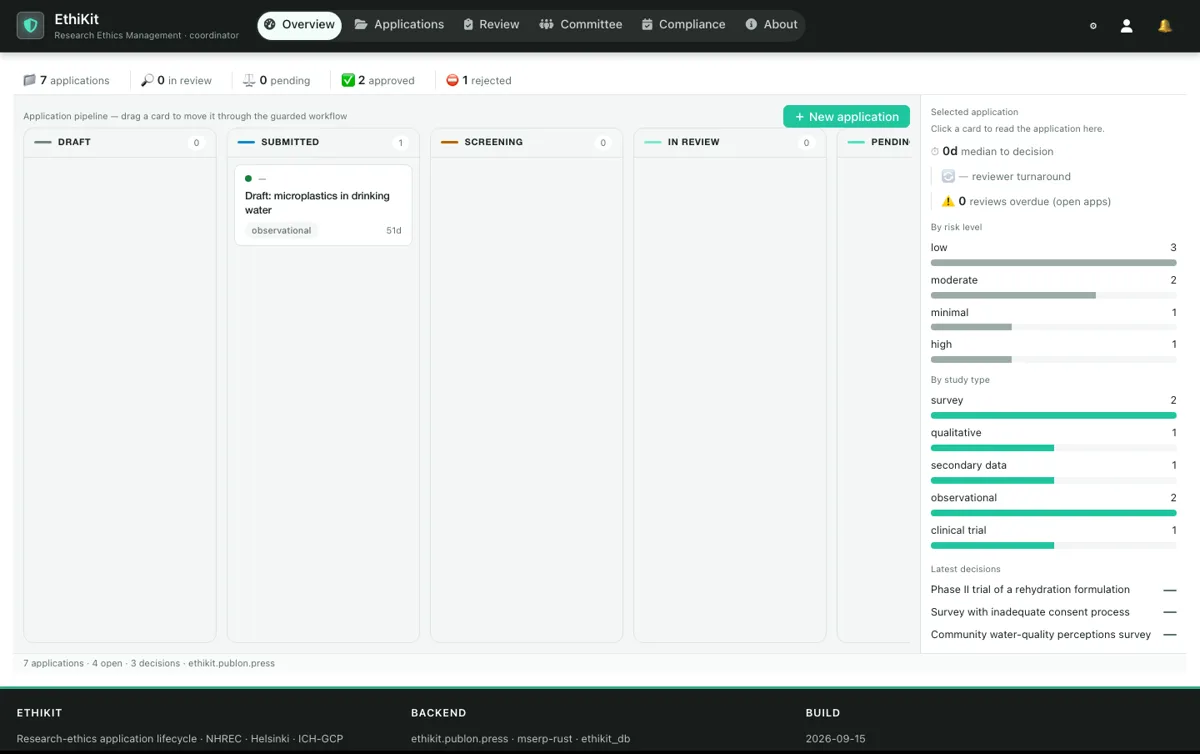
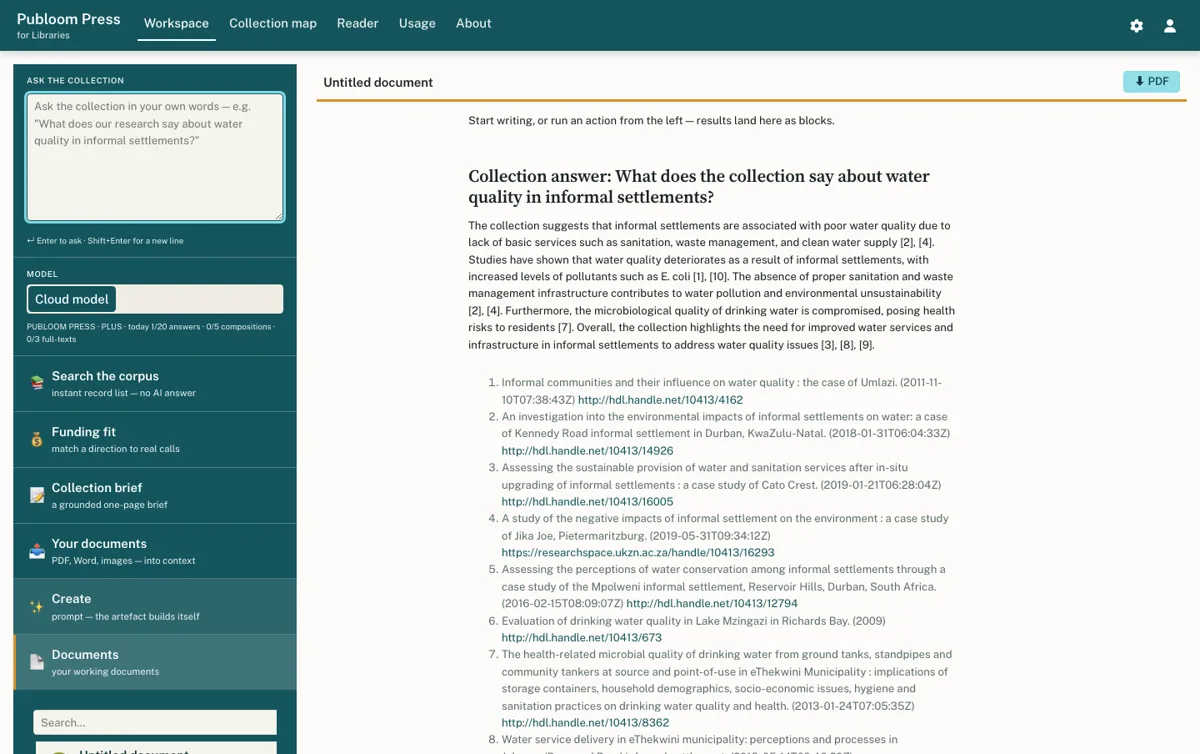
Three systems for the library and the research office: benchmarking a coalition of libraries, the research ethics committee's whole workflow, and the repository that answers questions from its own holdings. Each card opens a walkthrough in screenshots; the demonstration beneath each is open to anyone.
Modern Scholarship is applied research with a product at the end of it. Each strand below started from a problem an institution brought, and each has produced working systems that the institution now runs, books that explain the method, and papers that hold it to account.
Student success at scale: early warning, advising, casework and executive insight for universities; a learning platform that teaches from published books; and companions for children whose learning needs a different shape.
The WASH R&D Centre's programmes: de-risking decentralised sanitation in the field, deciding which technology suits which settlement, river and catchment monitoring, water accounts, and the science of the treatment works written for the people who run them.
Decision support built with a metropolitan municipality: settlement registers with their geometry, commitments read from the integrated development plan, schedules costed against the works and the fleet, and the strategy document a council can defend.
How a research centre, a journal, a conference or an accreditation is run: projects and finance, editorial desks, review, readiness against the standards, and the records that survive an audit.
Getting products into the field and paid for: a probe line and the telemetry behind it, a chemicals exchange, a laboratory's sample tracking, certificates as a revenue rail, and payroll for a South African employer.
Five of the 44 systems carry most of the programme's weight today. Each picture is a screenshot of the system as it runs.
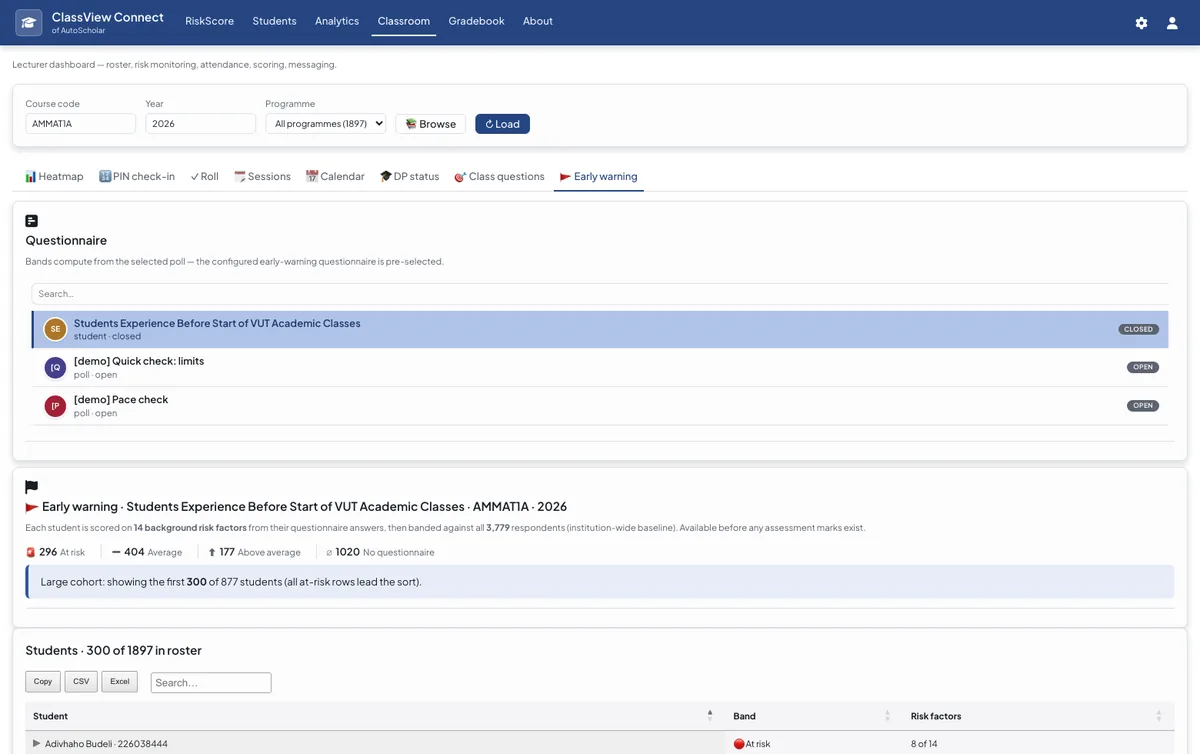
The student success system. It reads an institution's results, registrations and attendance, finds the students and the courses that need attention, and writes the advice: to the student, to the lecturer, to the programme and faculty coordinators, and to executive management. The judgement rests on applied statistics and graph theory over progression maps; language models draft the advice and never make the call. It runs at three universities behind their own logins, with early warning, advising, booking, casework and the executive insight surfaces.
runs for the institutions that licence it; the walkthrough above shows it
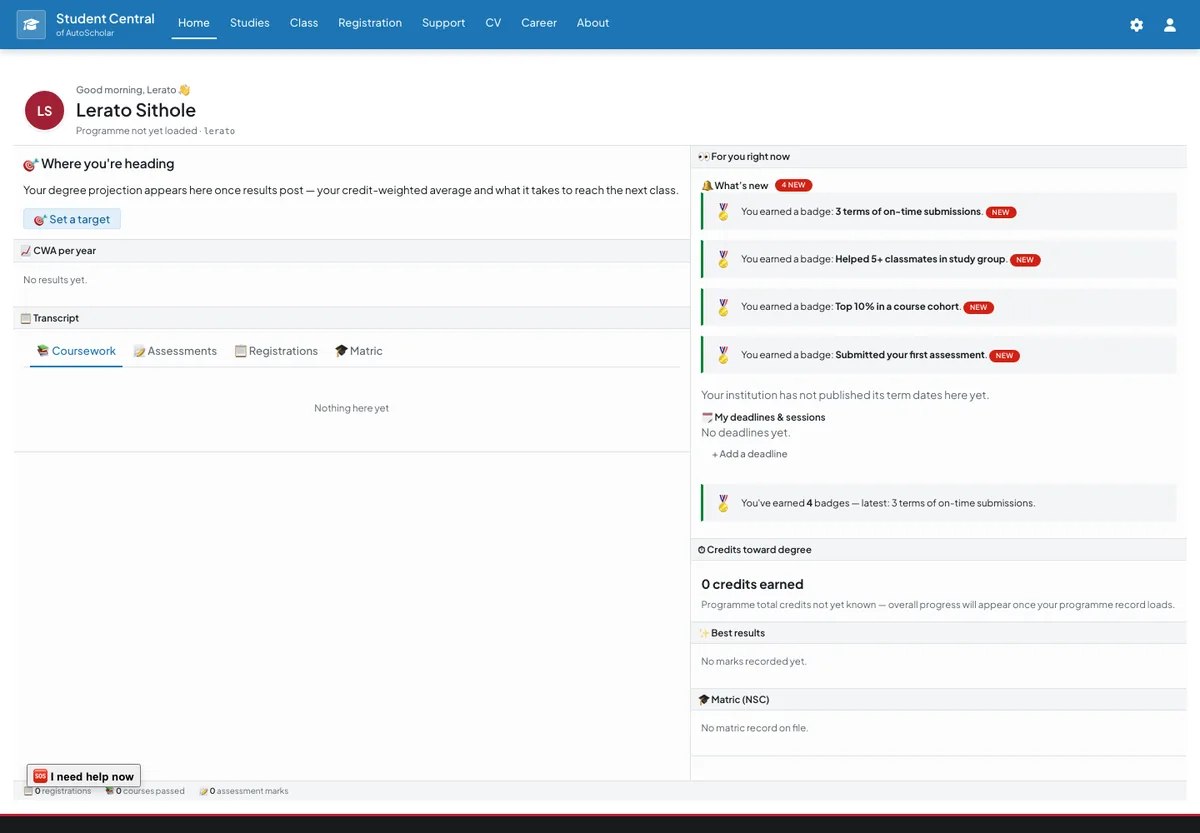
The learning platform the programme's systems sit in: courses and lessons, assessment and grading, advising and casework, admissions and alumni, and a research workspace for staff. A book published in Publon Press can be taught from directly, with the tutorial layer marking the work. Institutions run it on their own instance; a demo world is open to anyone.
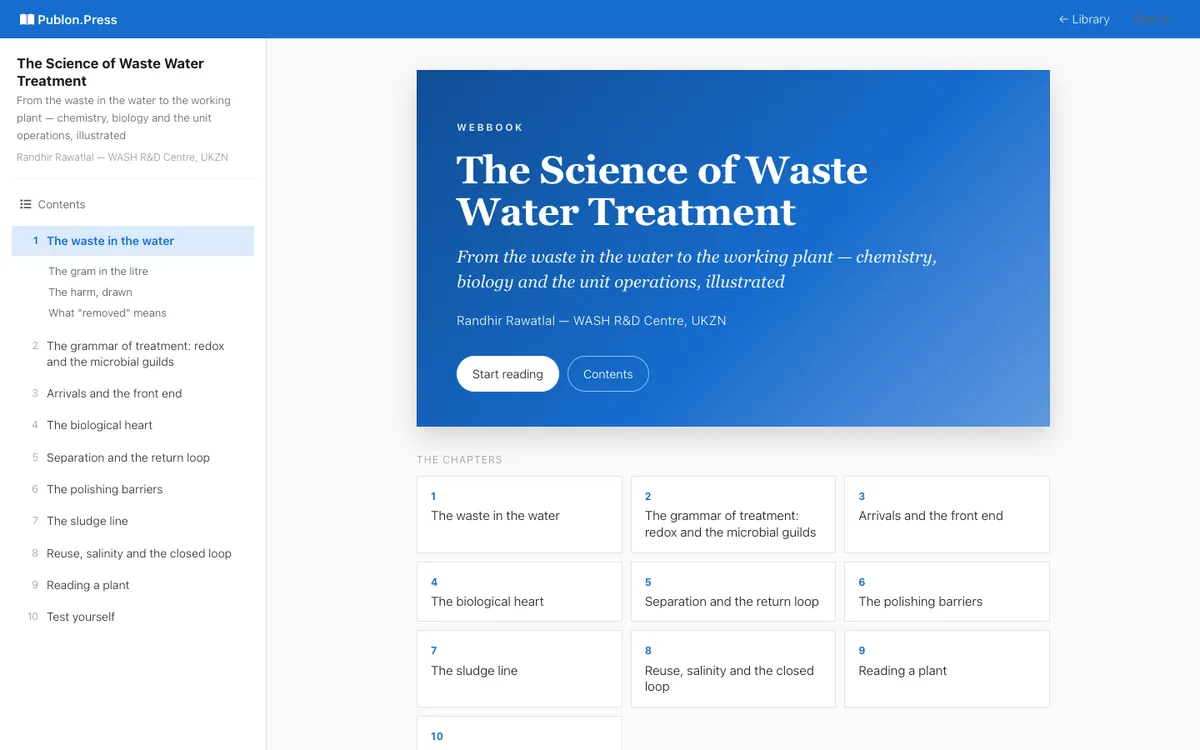
The publishing side of the programme: books written to be read in a browser, and papers published as standing pages rather than PDFs. 186 books are in the catalogue today, from the Modern Scholarship Practitioner Series to the reaction engineering courses and the WASH R&D Centre's wastewater series, with six curated collections that give a reader a path through them.
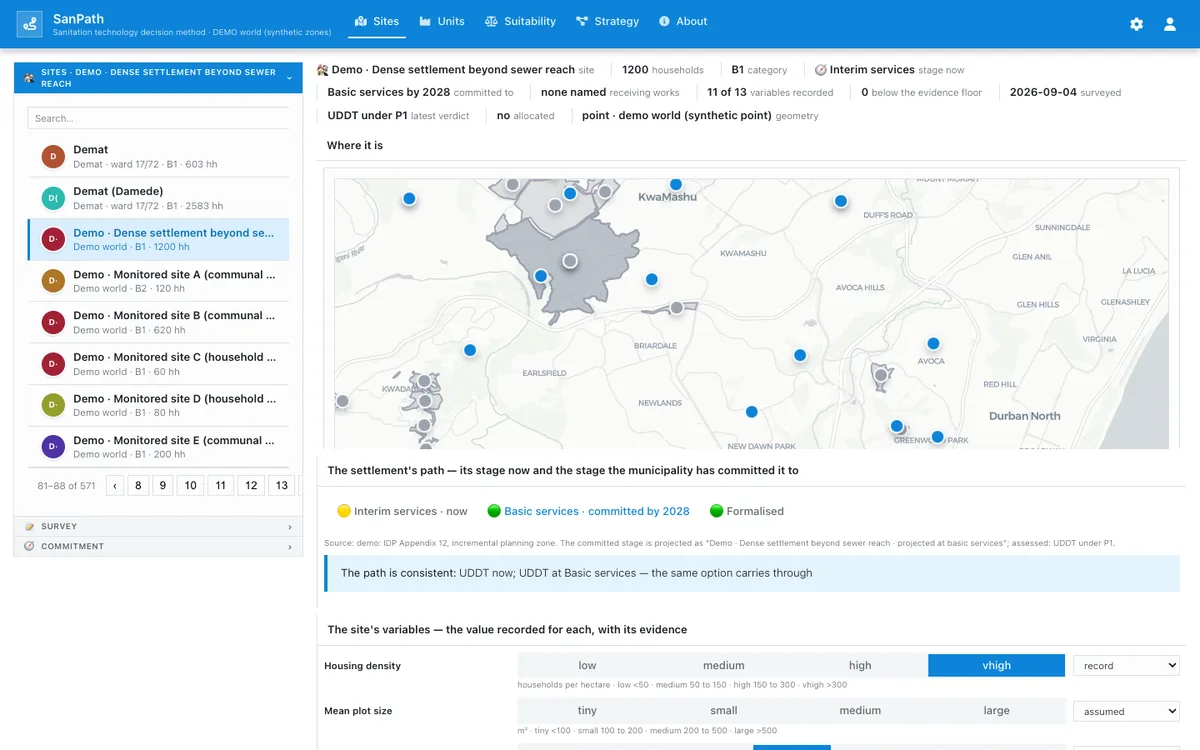
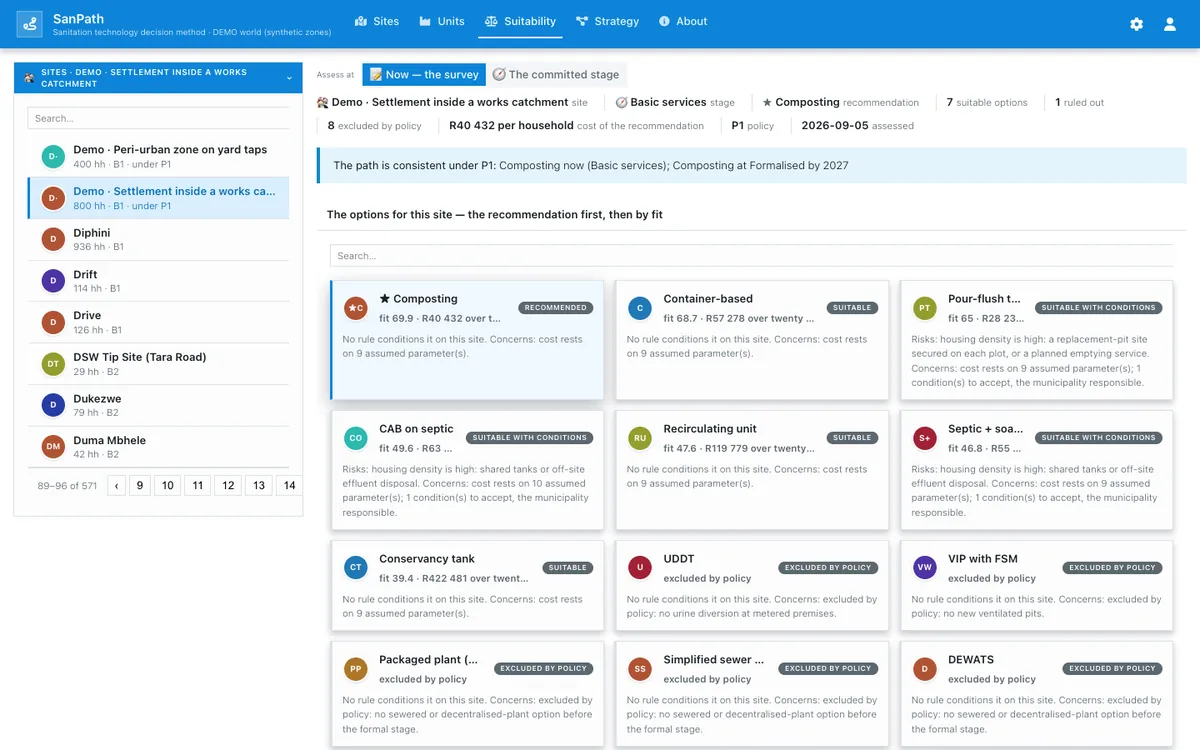
The sanitation technology decision method as a system, built with eThekwini Water and Sanitation. A settlement's variables are recorded once; the options that fit it are screened against a register of rules written from the standards, ranked on fit beside cost, and read at the stage the municipality has committed the settlement to. Across the settlements the commitments compose into a schedule. Every recommendation carries its rules and their sources, so it can be defended line by line.
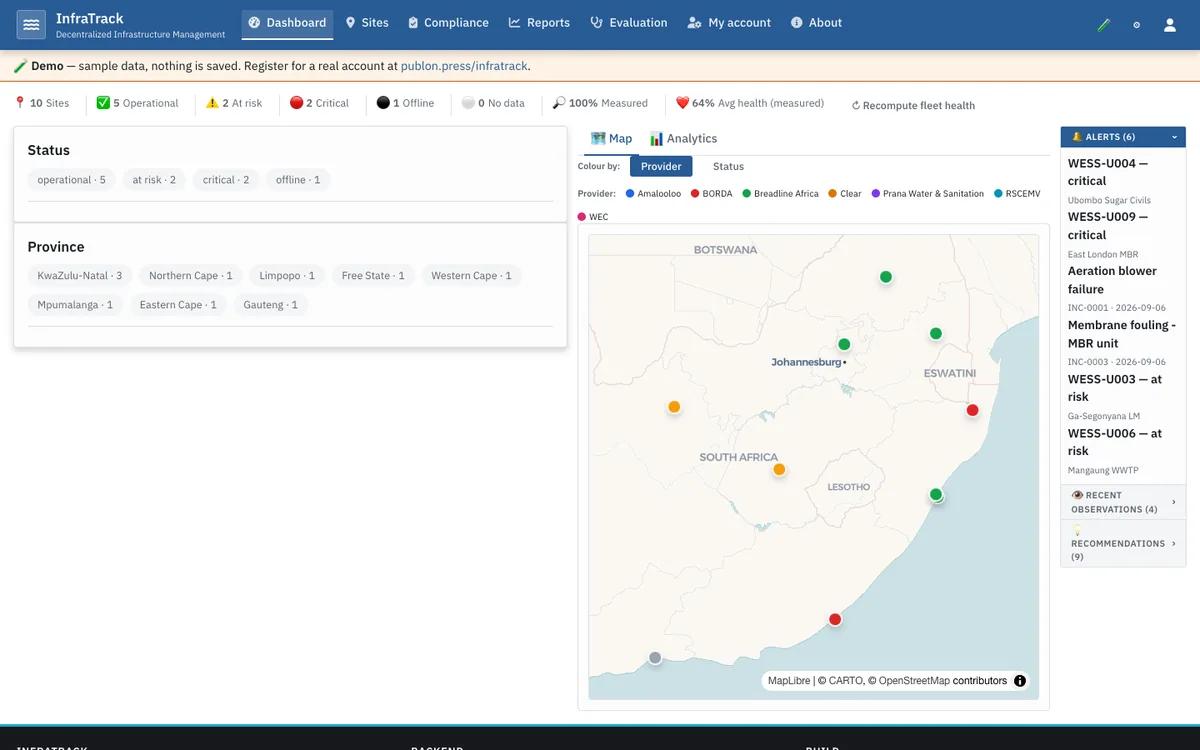
The field record of the WESS de-risking programme: sites, installed units, monitoring runs, hazards and the mitigation register, with the SenseArray telemetry from the field units folded in. It is the evidence base the sanitation decisions above are calibrated against, and the place a municipality sees whether a technology is operating within specification.
Modern Scholarship began as a project to give educators the access and training to teach with modern approaches, and it has kept that aim while the tools around it grew. The programme is organised in nine areas, and each area has produced at least one working system.
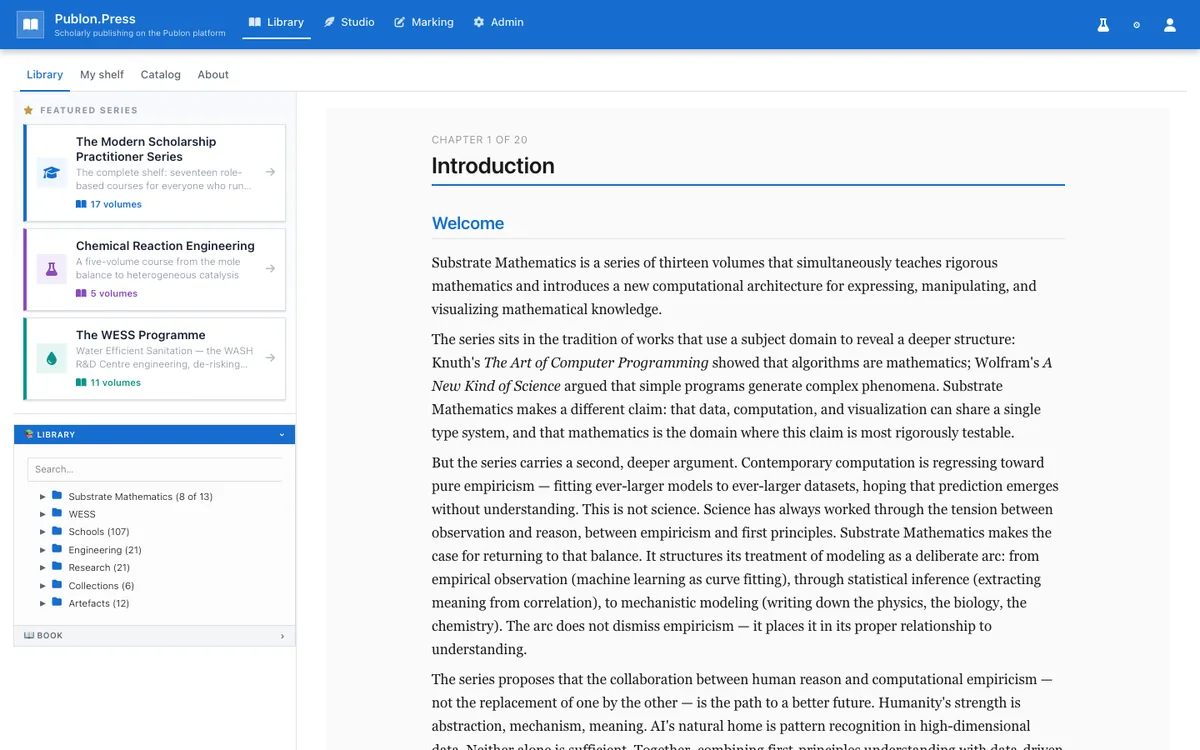
Books written to be read in a browser, with the figures, the equations and the exercises alive on the page, and papers published as standing pages rather than PDFs. The Modern Scholarship Practitioner Series is written for the people the programme serves; the engineering and science series come from the WASH R&D Centre and the reaction engineering courses; the school series carry the grade-six and grade-seven material the family companions teach from.
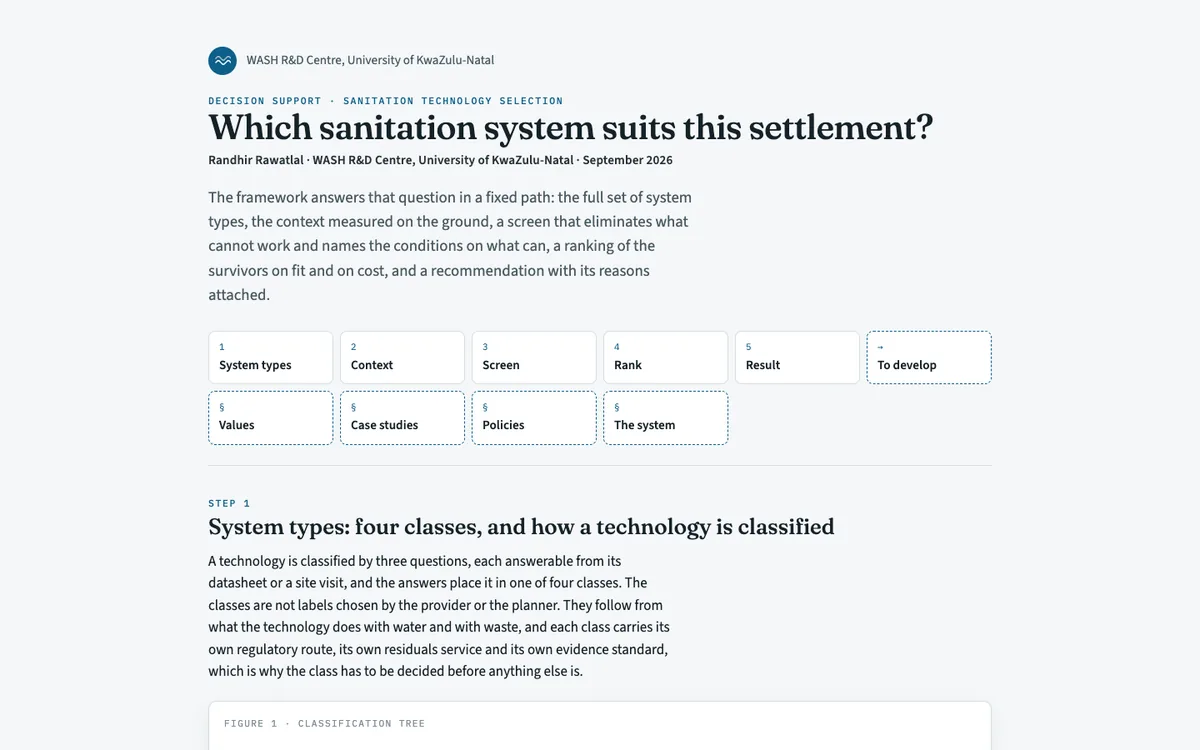
Standing documents, each a page of its own: method write-ups, protocols, study guides and programme pages. An artefact is revised in place and its screenshots are taken from the live system it describes.
Every system the programme has built, whether or not it is hosted for the public. Each card links to the demo version only; a demo world carries synthetic data and asks nothing of a visitor. The systems that run for institutions or a research centre do so behind their own logins and are not linked here.
The sanitation technology decision method as a system: a settlement's variables, the options that fit it at its stage and at the stage the municipality has committed it to, and the schedule of those commitments.
The WESS de-risking programme's field record: sites, units, monitoring runs, hazards and the mitigation register, with SenseArray's telemetry folded in.
Provider self-service over the same telemetry: a company's devices, runs and readings, with member API keys for field units.
The research-centre console: projects, finance, staff, equipment, events and messages for the WASH R&D Centre.
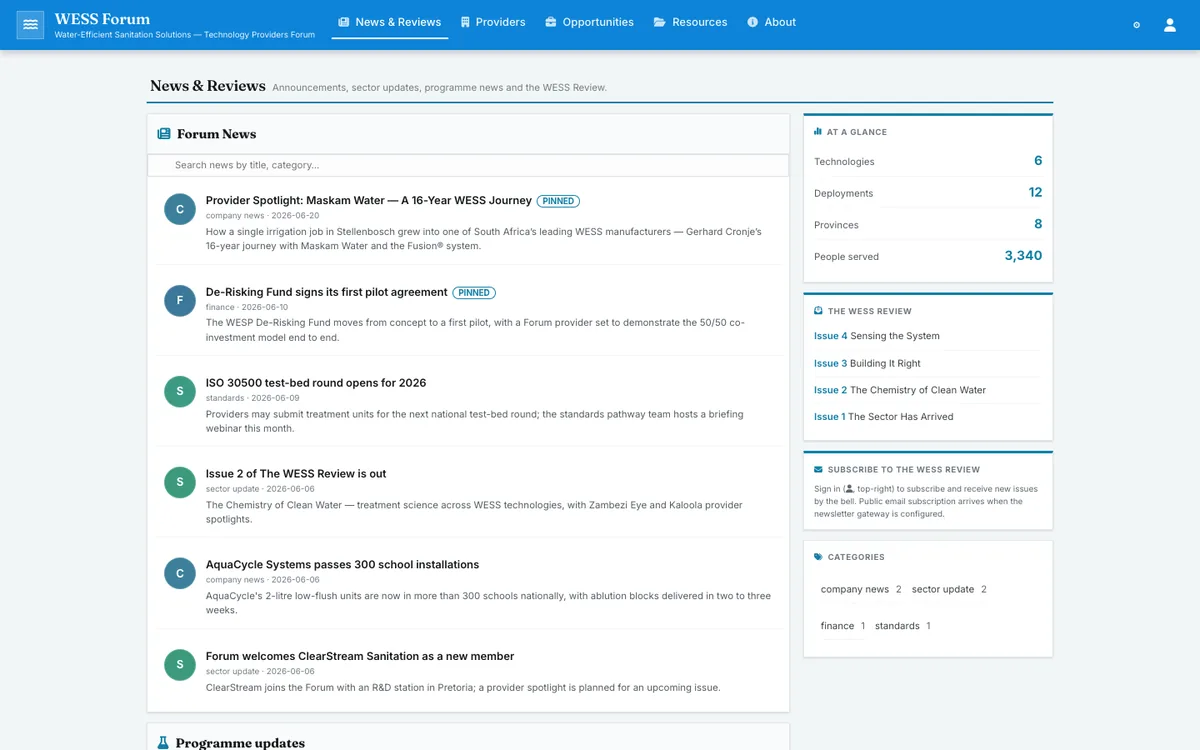
The forum of the WESS programme: grantees, technology providers and the municipality, with the programme's documents and decisions.
The programme's pulse: the sites' status flags and scored mitigation registers from the raw measurements.
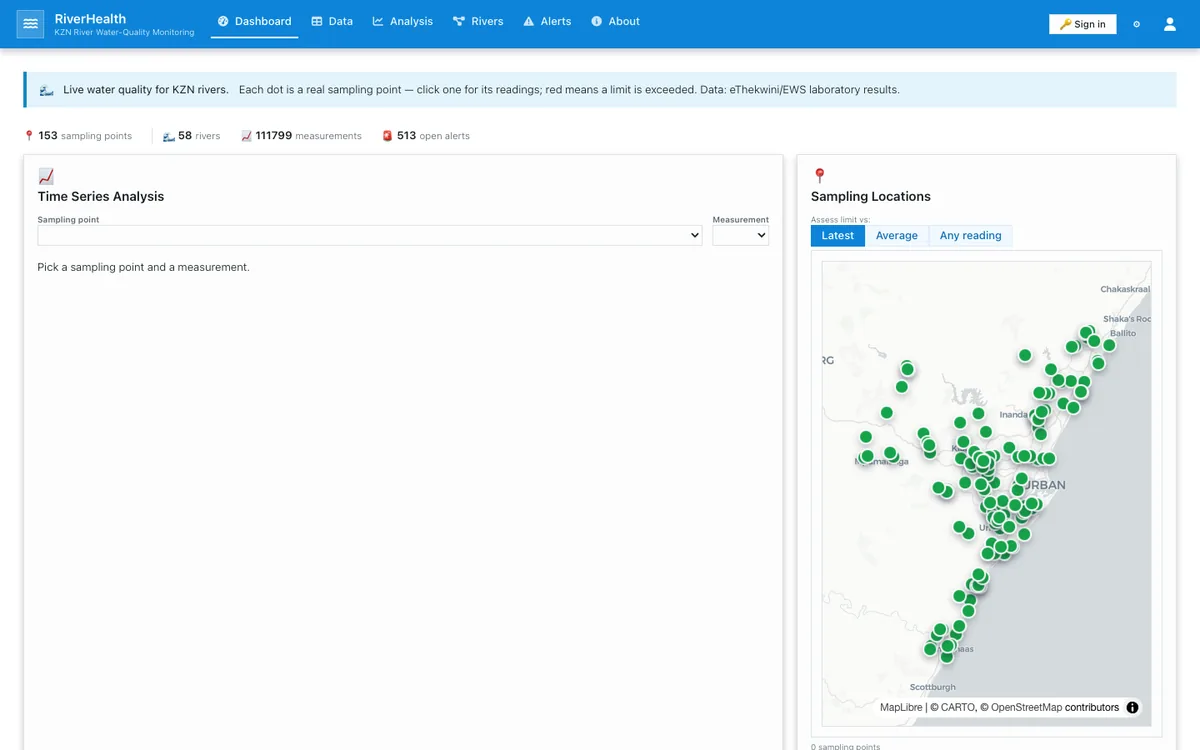
River health monitoring: sampling sites, indices and trends over the hydrology record.
Catchment and water-account views over the AmanziTrack record.
Geospatial staging: layers and points assembled for the WASH programmes' maps.
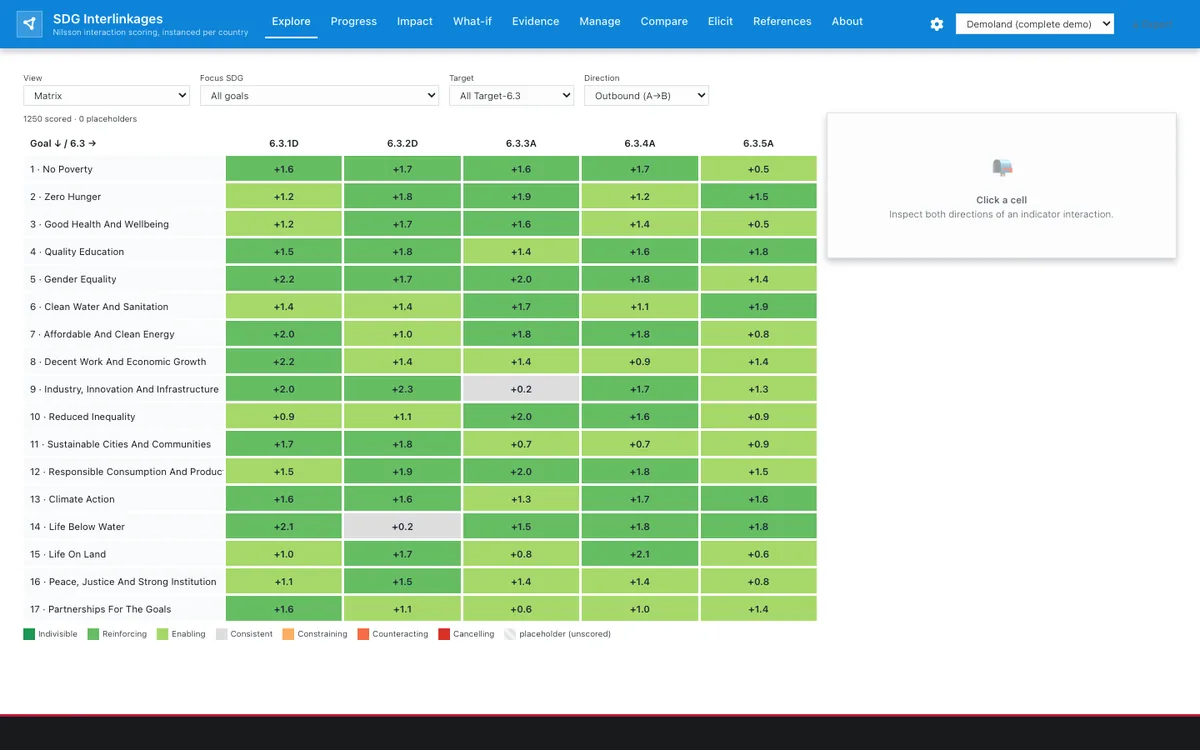
Indicator-interaction scoring across the Sustainable Development Goals, instanced per country, with export and LLM-assisted harvesting.
The NanoStream Blu probe line: the product, its channel model and the field units that post to SenseArray.
A chemicals exchange for laboratories and centres: what is held, what is offered, what is sought.
The scholarly publishing destination: the reader, the books, the collections and the tutorial layer. The webbooks below open in it.
The learning platform: one student account across institutions (the front door at scholarcloud.live), courses, assessment, advising, casework, run for institutions. The Publoom research workspace is its own card.
The researcher's workbench: the repository the course "Working with AI on your own research" builds (models, provenance, verified references, checks, decisions, experiments, the AI-use declaration), read by the supervisor against the rubric; the centre's programme and candidatures from Centrix; the library and watches from Publoom.
The research workspace that weaves text from a repository: ask the corpus with cited answers, compose artefacts, map a collection, read and annotate. One codebase, configured per venue: the academic/library instance, the Researcher venue (my library, keeping up, funding), the Libraries demo, and the standalone RAG demo.
Student success analytics for universities: results, early warning, advising and the executive insight surfaces, run per institution behind their own login.
The day-view learning companion for a child with ADHD: today's plan, practice, progress and term tests.
Play-based speech and cognition for a non-verbal child with cerebral palsy.
Levelled practice: a grind through graded exercises with mastery tracking.
The Substrate mathematics volumes as a navigable site.
Registration advice for UKZN: curricula, rules and the advisor.
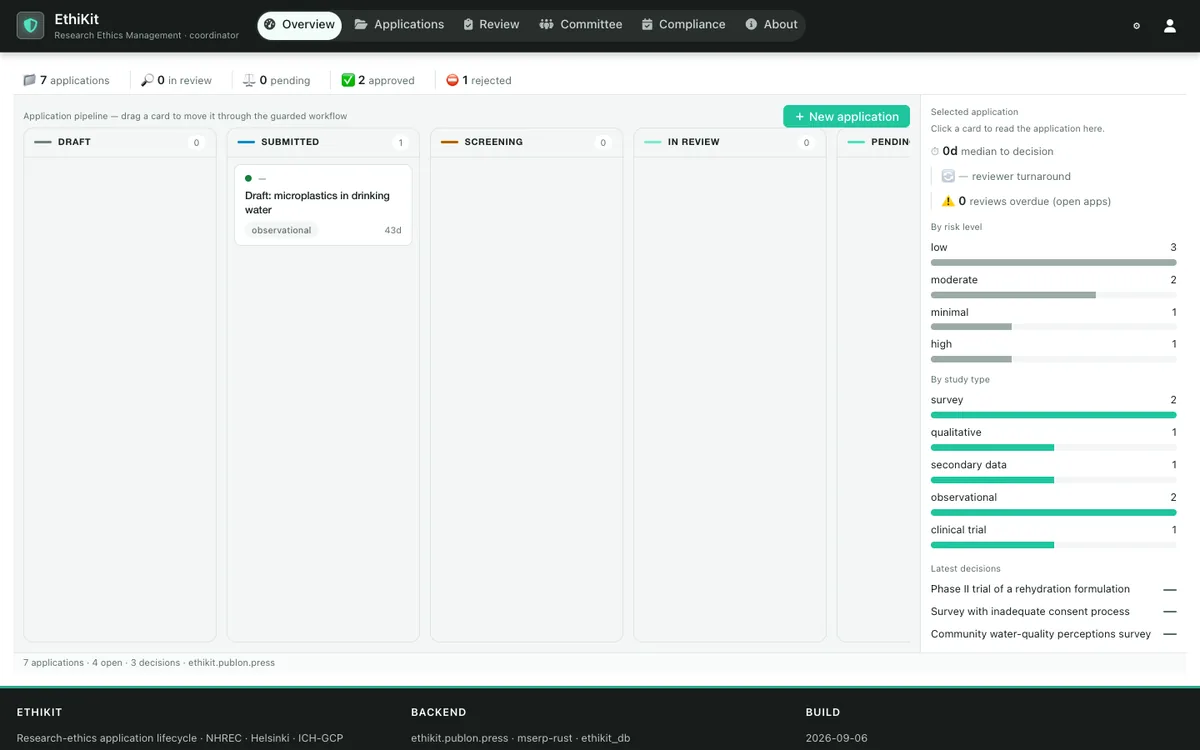
Research ethics workflow: applications, reviews, conditions and approvals.
Certificates issued, verified and paid for: the credential and revenue rail behind the short courses.
Library benchmarking for South African libraries: returns, validation, benchmarks, gaps and the improvement cycle.
The evolving library: collections, circulation and review, classic and new.
Academic conferences from call to proceedings: submissions, review, programme and the proceedings flywheel.
The journal desk: submissions, reviewers, decisions and issues over the platform's services.
Accreditation readiness: the clause wall, conformity evidence and computed readiness per programme.
Design a schema in the browser, preview it in memory, provision it on the wire and run it through the generic bindings.
Connections to outside APIs and datasets, with schemas, runs and Earth Engine access.
Laboratory sample tracking with QR stamps, approval chains and project finance.
Payroll for a South African employer: runs, the EMP201 with SDL, retro difference runs and payslip self-service.
The fleet's coordination hub: boards, outcomes and the operations register for every session working this codebase.
The maths compute tier: ten aspect workbenches over a Rust engine.
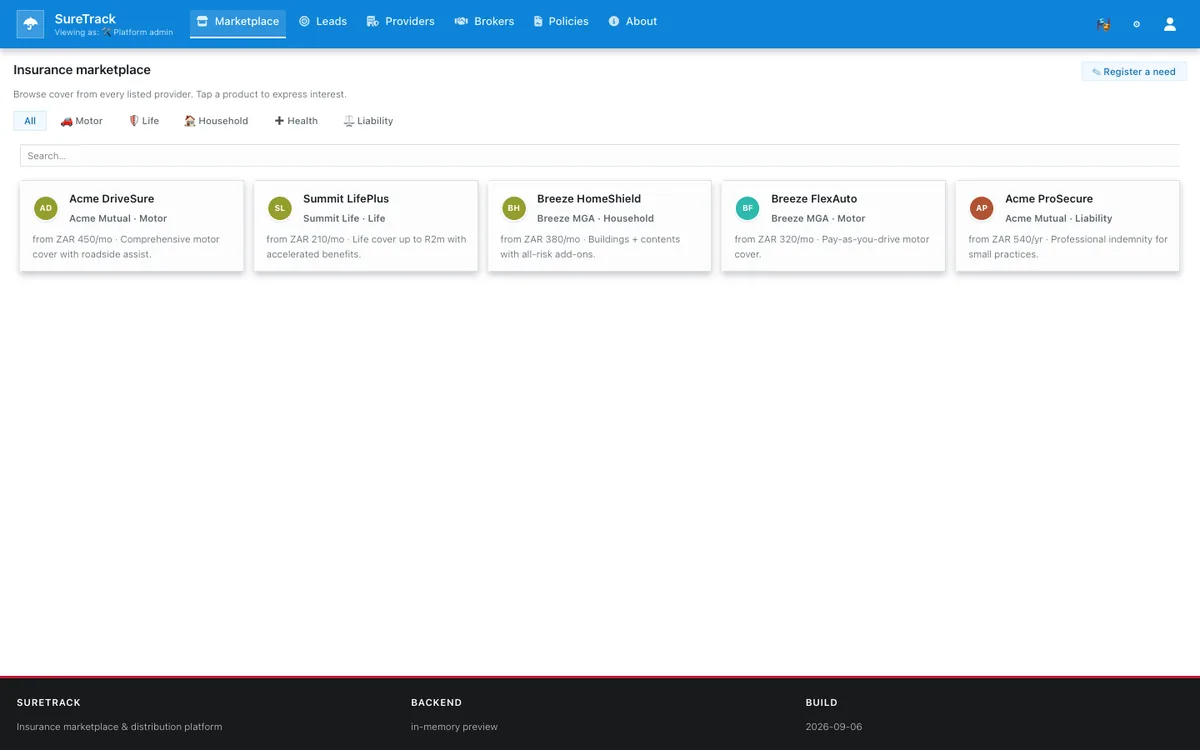
An insurance marketplace: rating, quotes, policies, claims and reconciliation.
Mine and tailings monitoring: sites, samples and the compliance record.
Partner and grant relationships: agreements, obligations and reporting.
Municipal works requests and their resolution.
Workplace wellness: check-ins, referrals and the counselling team's view.
Alumni and advancement: relationships, campaigns and giving.
The staff room: leave, attendance and the people register.
A practice's operating system: clients, casework and billing.
Private daily pages: the habit layer of the life plan.
Modern Scholarship is led by Randhir Rawatlal. Write to [email protected].